The real pain today
The front door is everywhere. Questions come through chat, email and meetings, and nobody can say how long anyone waited.
Rituals run on memory. The weekly triage starts with ten minutes of finding out what is overdue.
Comms are written from scratch. Every release note and migration notice is a blank page.
Continuity is a hope. An owner leaves and their areas are discovered later, unowned.
Your week with Loom
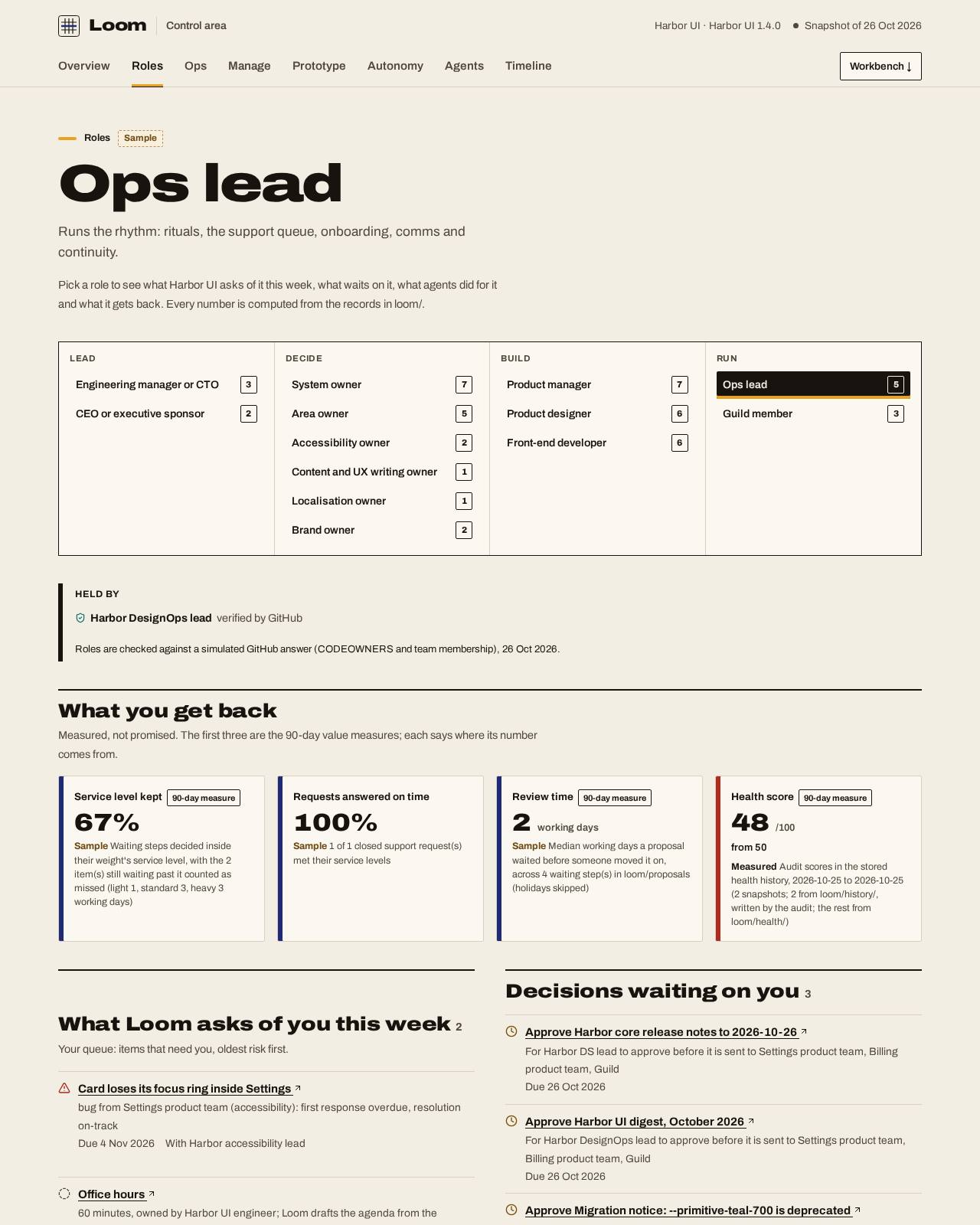
Monday. Your home lists requests past or near their service level, and the next ritual with its agenda already drafted. See the Ops lead's home
Tuesday. You work the support queue: every request has a first-response and a resolution clock in working days, and the person who should act now.
Wednesday. You approve the drafts waiting on you: release notes, migration notices and the weekly digest, written by Loom from the records for you or the owner to approve. See the comms centre
Thursday. The weekly triage runs on the agenda Loom drafted: overdue reviews, contested proposals, expiring exceptions and released changes. Outcomes are recorded as sessions. See the rituals
Friday. You read the continuity check: roles without a backup, owners who have left and still hold areas, and what to record to close each gap. See continuity
What changes
The rhythm survives a busy week and a departure. Loom measures the share of decisions made inside their service level, requests answered on time, review time and the health score over time, and says where each number comes from. In the product tour they are sample values; in your organisation they come from your own records.
What you never have to do
You never build the triage agenda by hand. You never start a release note from a blank page. You never discover an unowned area after its owner left.
Coming next
Drafts will post to your Slack or Teams channel once a workspace is connected, and calendar invites will be sent rather than downloaded.